Fabric First, Returns Second: Deep Retrofit ROI for UK Property Investors in 2026
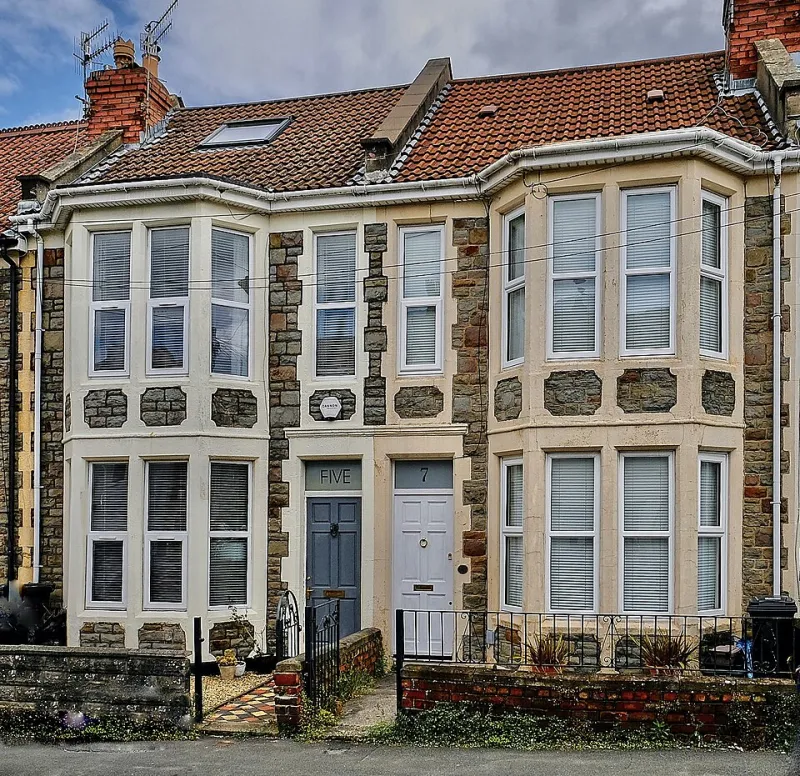
Photo: Anthony O'Neil , CC BY-SA 2.0, via Wikimedia Commons
Deep retrofit is often presented as a sustainability decision. For UK property investors, it is also a capital allocation decision. The question is not whether insulation, glazing, ventilation and airtightness are desirable. It is whether a particular package of works improves the investment case after allowing for purchase price, refurbishment, void periods, finance costs and the ceiling value of comparable homes.
In 2026, energy performance is more visible to tenants, lenders and buyers than it was a decade ago. That does not mean every retrofit pays. A fabric-first approach can protect value where it is specified and installed well. It can also become overcapitalisation where the spend is driven by a green label rather than a measured improvement in the building.
What fabric-first actually means
The principle is to reduce heat demand before changing the heat source. In practice, that means addressing insulation, glazing, draughts and thermal bridging, then ensuring controlled ventilation, and only then considering heating system replacement. A new boiler in a poorly insulated house is not a deep retrofit. It is a heating upgrade, and it may be cosmetic green-washing if the building fabric remains weak.
For older UK homes, the sequence matters because moisture risk matters. Internal wall insulation, for example, requires a moisture assessment and a specification that manages interstitial condensation. Loft insulation must maintain ventilation paths. Airtightness works must be coordinated with ventilation so that the home does not become under-ventilated. These are build-quality issues before they are environmental ones.
The investor's four tests
A retrofit package should survive four tests.
First, the ceiling value test. What are comparable, improved homes in the same street or block actually selling for? If the post-works value is at or above that ceiling, the retrofit is unlikely to be recoverable on sale.
Second, the rent ceiling test. What rent can the local market bear for the improved specification? A high-performance home may command a premium, but it will not break the ceiling set by location, space and condition.
Third, the running-cost test. Estimate annual savings conservatively, using current energy prices and a realistic occupancy pattern. Do not present savings as certain income.
Fourth, the delivery test. Deep retrofit is disruptive. Void periods, decanting, sequencing and commissioning all carry cost. A package that looks attractive on paper can fail if the programme is unrealistic.
Worked example: a 1930s mid-terrace
Consider a three-bedroom 1930s mid-terrace in a northern English city. The purchase price is £185,000. A cosmetic refurbishment of kitchen, bathroom and decoration is £20,000. The property has an EPC D, a gas boiler and a mix of original and replacement windows. Market rent before works is £950 per month.
The investor is considering a fabric-first package of £34,000:
| Measure | Indicative cost |
|---|---|
| Loft insulation upgrade and loft hatch | £1,800 |
| Internal wall insulation to solid walls | £13,000 |
| High-performance glazing | £7,500 |
| Airtightness works and ventilation | £5,500 |
| Heating controls and cylinder upgrades | £2,000 |
| EPC, testing and commissioning | £1,200 |
| Contingency | £3,000 |
After retrofit, the investor expects EPC C, a rent of £1,050 per month and annual running-cost savings of £650. The rent uplift is £1,200 per year. Gross annual benefit is therefore £1,850. Against £34,000 of retrofit spend, that is a simple return of about 5.4 per cent before voids, maintenance and finance costs.
Now consider resale. If improved comparables in the street cap out at £255,000, the total cost of purchase, refurbishment and retrofit is £239,000 before acquisition costs and fees. The project may still show a modest margin, but the retrofit is doing much of the work for a thin return. If the same package were applied to a property bought at £205,000, or in a location where the ceiling value is £285,000, the case would be stronger.
The conclusion is not that the retrofit is bad. It is that the retrofit must be priced against the right benchmark. A 5.4 per cent gross return on retrofit spend may be acceptable for a long-hold investor who values lower running costs and tenant resilience. It is unlikely to satisfy a developer seeking a short-term profit unless the purchase price is correspondingly sharp.
Where overcapitalisation appears
Overcapitalisation usually appears in three forms. The first is spending on measures that do not change the effective performance of the building, such as glazing upgrades without addressing draughts and insulation. The second is spending beyond the local ceiling value, often on a deep retrofit in a street where buyers are not paying a premium for EPC ratings. The third is spending without commissioning evidence: insulation gaps, unsealed junctions and unbalanced ventilation can leave a home with a better certificate but a worse living environment.
Investors should also distinguish between EPC improvement and fabric improvement. An EPC can move up a band through relatively shallow changes. A genuine performance upgrade should be evidenced by airtightness testing, ventilation commissioning, photographic records of insulation continuity and a moisture-risk assessment where solid walls are involved.
Build-quality checkpoints
Before committing to a deep retrofit, ask for:
- A room-by-room specification with U-values and junction details, not a headline EPC target.
- A moisture risk assessment for internal wall insulation and any change to ventilation.
- An airtightness strategy that identifies the line of the barrier and who is responsible for sealing it.
- A ventilation commissioning certificate and clear user instructions for the occupant.
- Photographic evidence of insulation continuity before plasterboard or finishes close the work.
- A separate contingency for opening up works, particularly around windows, roofs and party walls.
The investment view
Fabric-first retrofit can be a sound investment where the property is purchased at the right basis, the local market recognises the improvement, and the works are specified and commissioned to a verifiable standard. It becomes overcapitalisation where the spend is justified by environmental intent alone, or where the post-works value and rent cannot recover the outlay within a realistic hold period.
The most defensible approach is to model the retrofit as a separate investment case, not as part of a general refurbishment. Compare the spend against rent uplift, running-cost savings, resale evidence and the cost of disruption. If the numbers are marginal, improve the specification rather than the sales narrative. In UK housing, performance that cannot be seen is often the performance that is most easily lost during construction. OPPS Developments treats that as a build-quality risk first and a sustainability claim second.