Levy Before the First Skip: Auditing CIL Exposure and Commencement Notices on UK Renovation Permits
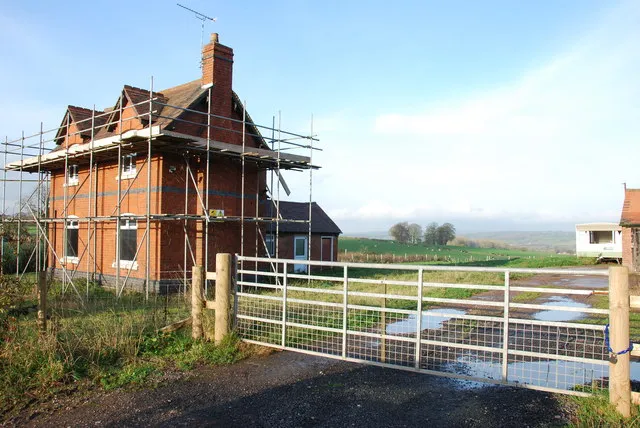
Photo: Anne Burgess , CC BY-SA 2.0, via Wikimedia Commons
The Community Infrastructure Levy is often discovered after the first invoice, when the scheme is fixed and the programme is under way. That is the wrong end of the project. CIL is a local charge on chargeable development, calculated by reference to gross internal area and the council's charging schedule. It is not the same as a section 106 obligation, and it does not apply uniformly across England. For renovation buyers, the levy is best treated as a diligence item before exchange, not a post-consent administrative task.
What CIL Actually Charges
CIL is charged on the net additional floorspace created by a chargeable development. The council's charging schedule sets a rate per square metre, often differentiated by use and sometimes by location. Mayoral CIL applies in London in addition to borough rates. The levy is collected by the charging authority and is payable at commencement, although instalment policies may spread the cost where adopted.
The first audit question is therefore simple: does the local planning authority have a CIL charging schedule, and is the site within a charging area? Not every council has adopted CIL, and some have low or zero rates for certain uses. The second question is whether the proposed works create chargeable floorspace at all.
The 100 Square Metre Threshold and the New-Dwelling Trigger
For extensions and other additions to existing buildings, CIL generally becomes relevant when the additional gross internal area reaches 100 square metres or more. Below that threshold, an extension may escape the levy; above it, the charge is calculated on the net additional area, not the whole building. A 90 square metre rear extension and a 110 square metre rear extension can therefore sit on different sides of a material cost line.
The creation of a new dwelling is a separate trigger. A conversion or subdivision that produces a new home can be chargeable even where the floorspace increase is modest, depending on the permission and the council's approach. Loft conversions, basements and roof extensions that add floorspace should be tested rather than assumed exempt. Change of use alone is often not chargeable, but the boundary is not one to guess at; the permission should be read alongside the charging schedule and the CIL regulations.
Demolition Credits and the Six-Month Test
Where an existing building is to be demolished, the levy calculation can take account of the floorspace lost. A demolition credit may be available for floorspace that has been in lawful use for at least six months of the previous 36 months. The credit reduces the net chargeable area and can materially change the viability of a redevelopment scheme.
The evidential burden falls on the applicant. Rates records, utility bills, leases, photographs and planning history may all be needed to demonstrate lawful use. Demolishing before permission is granted, or before the credit is properly documented, can forfeit the benefit. Where the credit exceeds the liability, it is generally applied against the charge rather than paid out as cash, so the appraisal should not treat it as a refund.
Self-Build and Other Reliefs
Self-build exemption is available for dwellings built by or for the occupier, but it must be claimed before commencement and is subject to occupation conditions. If the dwelling is sold within three years, the exemption can be clawed back. Charitable relief and social housing relief follow separate tests. None of these reliefs is automatic, and each requires forms, evidence and timing.
For buyers, the key point is that relief is not created by the planning permission. It is created by an application made in the correct form before the relevant trigger date.
Commencement Notices and the Cost of Starting Early
A commencement notice must be submitted before the chargeable development begins. Failure to do so can lead to surcharges, loss of the right to pay by instalments and, in some circumstances, the council treating the liability as due immediately. An assumption of liability should also be filed early; if no one assumes liability, the landowner can be pursued.
The commencement notice is not a planning formality to be completed by the site manager on the first morning. It should sit in the project programme with the same status as building control notification and party wall awards. Starting work before the notice is submitted is a common and expensive trap.
An Audit Checklist Before Exchange
- Obtain the council's CIL charging schedule and confirm whether the site is in a charging area.
- Calculate existing and proposed gross internal area, and identify the net additional area rather than the total floorspace.
- Check lawful use evidence for the 36-month lookback if demolition is proposed.
- Model the demolition credit before designing the scheme, not after the viability appraisal is fixed.
- Confirm whether self-build, charitable or social housing relief is available and diarise the pre-commencement forms.
- Check the interaction with section 106 obligations and any affordable housing requirements.
- Put the assumption of liability and commencement notice in the programme before the first skip arrives.
CIL is not usually the largest cost in a UK renovation, but it is one of the easiest to overlook and one of the hardest to unwind. The levy rewards early evidence and punishes late administration. For a buyer, the sensible approach is to audit exposure before exchange and to treat the commencement notice as a condition of starting, not a document to be completed afterwards.