The Survey Before the Skip: Ecology and Biodiversity Risk in 2026 UK Renovation Appraisals
Photo: unknown but before 1939, Public domain, via Wikimedia Commons
Most renovation appraisals still begin with the roof, the wiring and the damp. In 2026, a credible appraisal should begin one step earlier: with the possibility that the building, its roof void or its garden is already occupied by a protected species, or that the planning permission carries a biodiversity net gain condition that changes the development economics. Ecology is no longer a fringe diligence item reserved for rural barn conversions. It sits alongside party wall risk and drainage rights as a pre-exchange constraint that can affect both cost and programme.
Why ecology belongs in the acquisition file
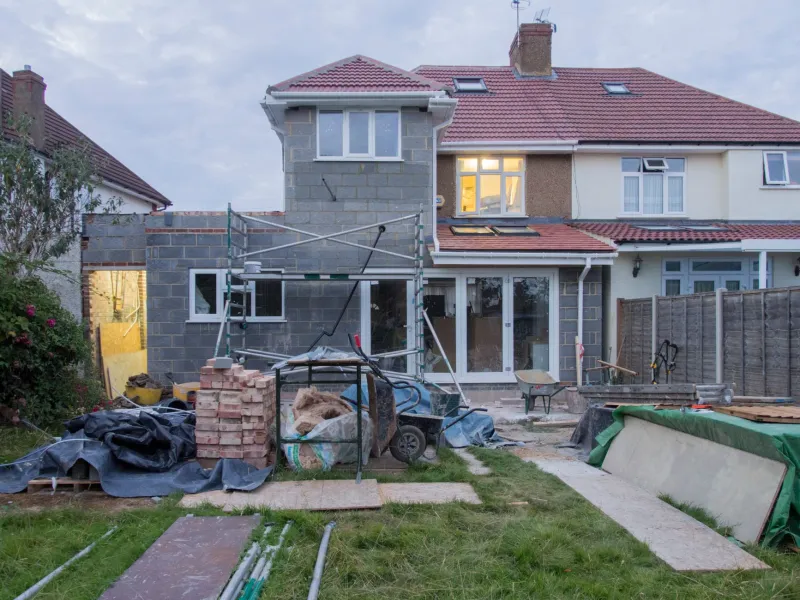
A preliminary ecology appraisal is inexpensive relative to the capital at risk. A desk study and a preliminary roost assessment for a typical Victorian terrace or 1930s semi may cost £400 to £800. That figure is small against a six-figure refurbishment budget, yet it is frequently deferred until after exchange because the buyer assumes the risk is remote. The assumption is weaker than it looks. Older roofs, hung tiles, lead flashings, loft voids and mature garden trees are exactly the features that create roost potential. The presence of bats is not a reason to abandon a scheme, but it is a reason to price the licence, the survey window and the construction constraints before contracts are exchanged.
Bats: the roof void is a programmes risk
Bats and their roosts are protected under the Wildlife and Countryside Act 1981 and the Conservation of Habitats and Species Regulations 2017. In practical terms, a roost cannot be disturbed, damaged or destroyed without a licence from Natural England. The diligence sequence is usually a preliminary roost assessment by a licensed ecologist, followed by emergence or dawn surveys where roost potential is identified. Emergence surveys are seasonal. The main survey window runs from May to August, with peak activity in June and July. Hibernation surveys, where required, run through the winter and are more limited in what they can prove.
That seasonality is the underwriting point. A buyer who exchanges in September on a property with moderate roost potential may not be able to complete the necessary survey work until the following May. Even where a licence is granted, works may be restricted to particular months or require a watching brief, tool-box talks and careful roof-strip sequencing. The direct ecology fees may be modest; the finance carry, the lost letting period and the contractor's remobilisation cost are not.
Nesting birds and the strip-out window
Bats attract most of the attention, but nesting birds can also interrupt a strip-out. If works affect hedges, trees, roof eaves or voids during the nesting season, a site inspection may be required before vegetation or roof coverings are removed. In practice, this can push a spring start into late summer. For refurbishment projects where the programme is already tight, the difference between a March and a September start can determine whether the scheme completes before the following winter. The remedy is not necessarily a full ecological survey; it is an early walkover and a works sequencing plan that respects the nesting window.
Great crested newts and garden land
Garden and backland sites carry a different ecology risk. Great crested newts are protected, and development affecting suitable terrestrial habitat within influence of a breeding pond may require a licence. In England, district level licensing provides a route for many schemes, but it still involves an application, a fee and a delay. Pond surveys are seasonal, generally running from April to June, and a negative result may require multiple survey visits. For a buyer considering a side garden plot, a backland development or a house with a large pond-adjacent garden, the newt question should be answered before the option period expires, not after planning permission is secured.
Biodiversity net gain on small sites
Since April 2024, biodiversity net gain has applied to small sites in England under the Environment Act 2021 framework. The requirement is generally a 10% uplift in biodiversity units against a pre-development baseline, secured through a planning condition and a management plan for at least 30 years. On a small renovation or conversion, the onsite habitat may be limited, but the calculation is not zero. Defunct garden land, intensively managed lawn, introduced shrubs and hardstanding all have a baseline value. Removing trees, hedges or rough grass can create a deficit that must be met through onsite habitat creation, offsite credits or, as a last resort, statutory credits.
The cost range is wide. Local offsite credits may be priced in the low tens of thousands per biodiversity unit, while statutory credits are materially more expensive. A small scheme with a modest deficit may resolve the issue for £5,000 to £15,000; a scheme that removes mature habitat or affects a sensitive site can face a far larger bill. The underwriting lesson is to obtain a biodiversity metric assessment before exchange where the scheme involves garden land, tree removal or a change from vegetated to hardstanding use.
A pre-exchange ecology checklist
- Commission a desk study and preliminary roost assessment for any pre-1940 roof, loft conversion or roof replacement.
- Confirm whether emergence surveys can be completed within the current season; if not, price the delay.
- Ask the ecologist to state the roost potential category and the likely licence route in writing.
- For garden or backland sites, check for ponds within 250 metres and confirm whether district level licensing is available.
- Request a biodiversity metric calculation based on the proposed scheme, not the existing permission alone.
- Build the ecology fees, licence fees, BNG credits and programme carry into the appraisal as separate lines.
- Make exchange conditional on receipt of the preliminary ecology report and a written programme opinion.
The cost of skipping the survey
A £600 preliminary assessment is not a bureaucratic overhead. It is a cheap option on information. If it identifies roost potential, the buyer can either price the licence and the seasonal delay or walk away. If it clears the roof, the buyer has removed a material uncertainty for less than the cost of a skip. The expensive route is the one that reverses the order: exchange first, survey later, then discover that the strip-out cannot begin until the following summer. In 2026 renovation underwriting, ecology is a cost line and a programme line. It deserves to be priced before the bricks are counted.