Root Cause: How UK Buyers Should Underwrite Japanese Knotweed in 2026 Renovation Deals
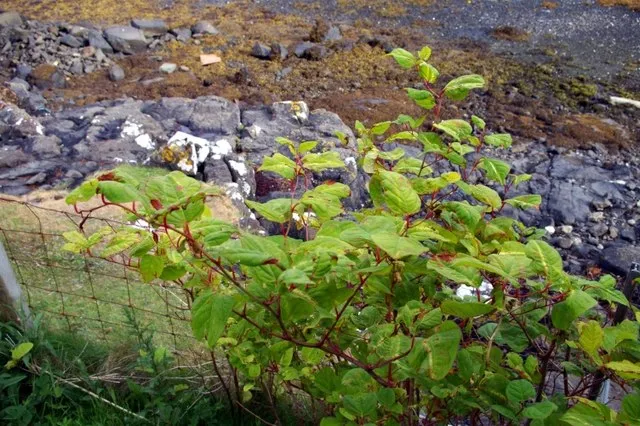
Photo: James Yardley, CC BY-SA 2.0, via Wikimedia Commons
The risk is rarely confined to the plot
Japanese knotweed is a persistent, deep-rooted plant that can spread through rhizome fragments carried by soil movement, water and site disturbance. For a UK renovation buyer, the practical concern is not only whether the plant is visible on the target property. It is whether it is present on adjoining land, whether a lender will accept the remediation proposal, and whether a future purchaser will inherit the same questions at resale.
Mortgage appetite varies by lender. Some will lend where a professional treatment plan and an appropriate guarantee are in place; others may decline or impose conditions where knotweed is recorded close to a building. Valuers may comment where the plant is visible or recorded within a commonly cited distance threshold, but the exact approach is institution-specific. The lesson for 2026 is not to rely on a general rule of thumb. Obtain a view from a broker or lender before exchange, and record that view in writing where possible.
What 'eradication' can mean in a contractor's quotation
A quotation that uses the word 'eradication' does not necessarily promise immediate removal of all viable rhizome. It may describe a herbicide management plan: repeat treatments across several growing seasons, followed by a monitoring period. That approach can be appropriate, particularly where excavation is impractical, but it is a programme of control rather than a single event. The plant may return, and the guarantee may depend on the contractor remaining in business.
Excavation is a different proposition. It involves removing contaminated soil and rhizome to a licensed waste facility. Japanese knotweed material arising from excavation is treated as controlled waste under the UK waste regime, so disposal must be documented. Excavation is more disruptive and more expensive, but it can be supported by a 10-year insurance-backed warranty. That warranty is usually the item lenders and future buyers care about most, provided it is assignable and properly backed.
A diligence sequence that matches the transaction timetable
A knotweed finding should be tested before exchange, not after completion. The following sequence is proportionate for most residential renovation acquisitions.
-
Inspect at the right time of year. Japanese knotweed is easiest to identify during the growing season, broadly from spring to early autumn. Winter dieback can hide the plant, so a midwinter viewing is not a substitute for a seasonal inspection. Look along boundaries, behind outbuildings, around patios and in neighbouring gardens. Photograph anything suspect and note the location relative to the building.
-
Read the seller's declaration. The standard property information form used in England and Wales asks whether the seller is aware of Japanese knotweed at the property. Ask for treatment records, guarantees, correspondence with neighbours and any council or contractor reports. A vague answer is a prompt for further enquiry, not a clean bill of health.
-
Commission the right searches. Local authority searches do not uniformly report knotweed. Environmental searches may flag recorded presence or risk, but the scope varies. Check whether the product is desktop-only or includes a site element, and do not treat a silent search as proof that the plant is absent.
-
Check the guarantee, not just the quotation. Ask who provides the warranty, whether it is insurance-backed, whether it is assignable to a new owner, how long it runs, what re-treatment it covers and what happens if the contractor ceases trading. A cheap treatment plan with no transferable protection may satisfy the contractor but not the lender or the next buyer.
-
Test mortgageability before exchange. Provide the lender or broker with the surveyor's comments, the treatment specification and the draft guarantee. Some lenders will accept a managed plan; others will require excavation or a particular form of warranty. A written indication of appetite is more useful than an assumption.
-
Price the whole liability. The quotation is only one number. Add monitoring visits, potential excavation contingency, legal costs, programme delay, financing carry and any expected resale discount. For a renovation project, also consider access for treatment and whether works can proceed without disturbing rhizome.
Indemnity is not a substitute for treatment
Indemnity policies are sometimes mentioned in knotweed discussions, but they are not a universal solution. They are generally more suited to historic or unknown risk than to a known, visible infestation. A policy may cover certain legal or diminution costs, but it will not normally pay for physical remediation. Where knotweed is known, a lender is more likely to look for a treatment specification and an insurance-backed guarantee than for an indemnity alone.
That distinction should be recorded in the diligence file. A seller's indemnity may have a role in a narrow set of circumstances, but it should not be confused with a contractor's warranty for works. The buyer needs to know what is insured, who benefits and whether the cover survives a sale.
Turning the finding into a negotiation
Walking away is not the only rational response to knotweed. The better approach is to convert the finding into a costed risk and a clear transaction term. A price reduction may be appropriate where the buyer will manage the works. Alternatively, the seller may fund treatment before completion, with the guarantee assigned to the buyer. A retention or escrow arrangement can bridge the gap where the programme extends beyond exchange.
Where the plant is on adjoining land, the negotiation becomes more complex. Treatment may require access, cooperation from a neighbour or a longer programme. That should be reflected in the offer and in the project timetable. For renovation buyers, the key question is whether the remediation can be sequenced alongside the build without compromising access, warranties or lender conditions.
A short pre-exchange checklist
- Seller's property information form and all knotweed correspondence
- Environmental search results, with scope understood
- Seasonal site inspection notes and photographs
- Contractor specification distinguishing herbicide management from excavation
- Insurance-backed guarantee: duration, assignability, provider strength
- Lender or broker confirmation of appetite
- Costed risk allowance and proposed negotiation position
- Post-completion monitoring and record-keeping plan
Conclusion
Japanese knotweed is a manageable risk when it is documented, specified and priced. The error is to treat a contractor's use of 'eradication' as proof of outcome, or to assume that a lender will accept the cheapest treatment plan. Underwrite the method, the guarantee and the exit. In 2026, that discipline is more useful than a default walk-away.