Borrowed Ground: Underwriting Flats With Split Structural Ownership in 2026
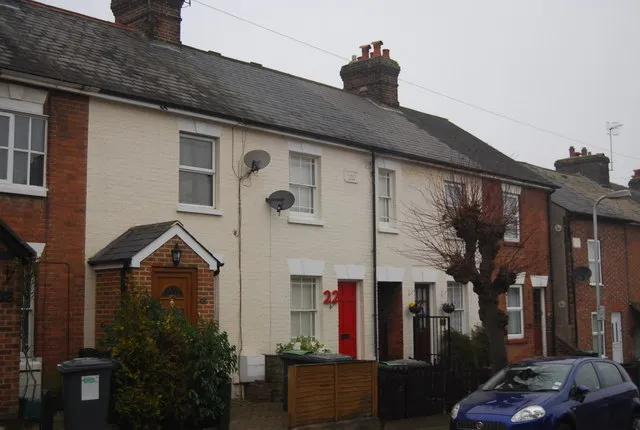
Photo: N Chadwick , CC BY-SA 2.0, via Wikimedia Commons
An upper-floor flat can present as a clean, self-contained unit: its own entrance, its own kitchen, its own set of windows. The title, however, may tell a different story. Where the freehold of the upper floor is separated from the freehold of the ground floor, or where two freehold titles overlap, the buyer is not acquiring a fully independent building plot. They are acquiring a space that depends on someone else’s structure. In 2026, with lenders applying closer scrutiny to unusual tenures and valuers taking a more cautious view of repair obligations, that dependence is a pricing issue rather than a legal curiosity.
The arrangement in plain terms
A flying freehold typically arises where the freehold of an upper floor or part of a building is sold separately from the freehold of the lower part, without a leasehold structure being created. Each owner holds a freehold title, but neither owns a complete building. An overlapping freehold can arise where two registered titles cover the same physical area, or where parts of the structure — a shared roof, a party wall, foundations or drainage — are not clearly allocated. The practical result is the same: the buyer needs rights over land or structure that they do not own, and the neighbouring owner needs rights over theirs.
This is distinct from a conventional leasehold flat, where the landlord owns the structure and the lease sets out repair obligations and service charges. In a split freehold arrangement, there may be no lease, no service charge mechanism and no clear covenant requiring the neighbouring freeholder to contribute to structural repairs. The title plan may show a horizontal division, but it will not necessarily answer the question that matters most: who is responsible for the load-bearing walls, the roof, the foundations and the drains?
Why a lender asks who owns the floor beneath
Mortgageability is the first commercial test. A lender needs adequate security and enforceable repair rights. Where a flat depends on a structure owned by another party, the lender may decline the application, restrict the loan-to-value or require a solicitor’s report and an indemnity policy. Some lenders will accept flying freeholds where the arrangement is long-established and the title includes adequate rights and covenants. Others treat them as non-standard and price accordingly. In 2026, valuers are also more likely to flag the arrangement as a risk to resale, particularly in a slower market where buyers have more choice.
The question is not simply whether a mortgage is available today. It is whether the next buyer will be able to obtain one. A property that is mortgageable only through a narrow panel of lenders carries a liquidity discount, even if the current owner has never had difficulty. Buyers should obtain a written indication from their broker before exchange, not after a valuation has been instructed.
Reading the title rather than the floor plan
Diligence begins with the official copies for every relevant title, not just the one being purchased. Buyers should obtain the registered titles for the flat and for the adjoining freehold, together with any transfer deeds, deeds of easement and planning history. The property information form should be checked for references to flying freeholds, shared structures, informal arrangements and repair contributions. If the freehold of the structure is retained by a third party — a local authority, a management company or an absent landlord — that party needs to be identified and their obligations understood.
Solicitors should map the rights and covenants that actually exist. A right of support is not the same as a repairing obligation. A covenant to insure is not a covenant to rebuild. Where the rights are informal or historic, the buyer should ask whether they are enforceable and whether they survive a transfer. The absence of a lease does not mean the absence of obligations, but it often means the obligations are harder to enforce.
Repair liability and the build-quality question
For a renovation project, split structural ownership affects both cost and programme. If the roof fails, who instructs the contractor? If the foundations subside, who pays for the engineer? If the upper flat needs a new floor structure, does the work require consent from the freeholder below? A contractor pricing a refurbishment needs a clear scope and a clear right of access. Where ownership is divided, those certainties are weaker, and the risk premium rises.
There is also a build-quality dimension. Works that affect the structure of a building owned in layers can require party wall agreements, deeds of easement or mutual covenants. These are not merely legal formalities: they can delay a start on site and add professional fees. A buyer should budget for legal agreements to regularise the arrangement where possible, and should obtain a structural engineer’s view on the condition and responsibility for shared elements before committing to a refurbishment budget.
Insurance and indemnity: cost versus cover
Indemnity policies are often suggested where a title defect exists. They can be useful, but they are not a substitute for repair rights. A policy may cover the cost of defending or remedying a defective title, but it will not usually pay for routine structural maintenance or compel a neighbour to contribute to a new roof. Premiums vary with property value and the nature of the defect; a typical residential policy may cost a few hundred pounds, but the cover should be read against the specific risk.
Building insurance also needs checking. If the flat is insured jointly with the adjoining freehold, the buyer should confirm that the policy covers the structural elements and that the sum insured is adequate. If each owner insures separately, gaps can arise. The buyer’s solicitor should confirm who insures what, and whether the arrangements are documented.
Quantifying the discount
There is no single percentage for a flying freehold or overlapping title. The discount depends on the severity of the arrangement, the availability of mortgage finance, the cost of regularisation and the depth of the local market. A workable approach is to compare the property with a leasehold or freehold equivalent, then deduct the cost of legal regularisation, any indemnity premium, additional professional fees and a liquidity allowance for future resale. Where the arrangement can be regularised — for example, by granting a lease or entering into a deed of mutual covenant — the discount may be modest. Where it cannot, the discount should be larger and should be treated as a permanent feature of the asset.
At OPPS Developments, the working assumption is that structural interdependence is a line item, not a footnote. It belongs in the acquisition model alongside refurbishment costs, contingency and exit risk. A buyer who prices it before exchange is in a stronger position than one who discovers it when a lender’s valuer raises a query.
A diligence sequence before exchange
The sequence matters. First, obtain and read every relevant title. Second, instruct a structural engineer to report on shared elements and repairing obligations. Third, confirm mortgageability in writing with a broker who understands non-standard titles. Fourth, obtain legal advice on the enforceability of rights and covenants, and on the cost of regularisation. Fifth, adjust the price or the conditions of purchase to reflect the findings. None of these steps is unusual in 2026; together they turn a difficult title into a quantified risk.
Split structural ownership is not a niche curiosity confined to old market towns. It appears in converted terraces, mixed-use high streets and adapted rural buildings. For UK buyers and developers, the lesson is straightforward: the floor plan shows the space, but the title shows the risk. Price the interdependence before exchange, and the asset is easier to hold, finance and sell.