The Sterilised Strip: How Drainage Rights Reduce Developable Area in UK Renovation Purchases
Most renovation appraisals treat drainage as a survey line: a condition issue to be remedied, a few thousand pounds to be allowed for, and a matter to be resolved after exchange. That approach misreads the risk. A drain crossing a garden, a sewer running beneath a proposed extension, or a private pumping station serving neighbouring homes is not simply a maintenance liability. It is a reservation of rights over land. It can prohibit building, dictate foundation design, create access obligations, and reduce the area that can be developed or sold. In 2026, with extension values sensitive to usable floor area and lenders attentive to title constraints, drainage deserves to be underwritten as a spatial and legal risk before exchange.
Drainage as a title matter, not a trade item
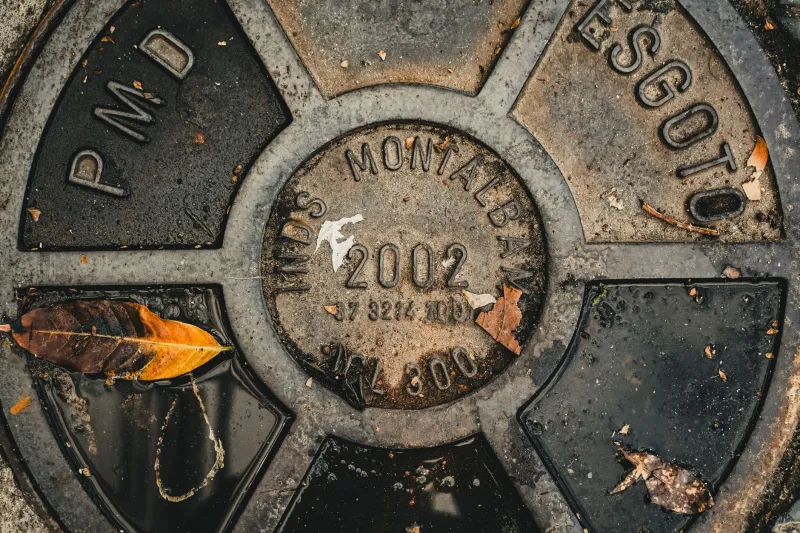
A public sewer is generally the responsibility of the relevant water authority, but the route it takes across private land is usually protected by an easement. That easement may permit access for inspection, maintenance and repair, and it may restrict building within a defined zone. Private drains and lateral connections can carry similar rights, even where they serve only a small number of properties. Since the transfer of private sewers in England and Wales in 2011, some previously private assets became public, but the change did not remove easements or make every drain buildable-over. Adoption status must be established, not assumed.
The practical consequence is that the title plan and the drainage plan need to be read together. A buyer who examines only the headline title and commissions a standard drainage survey may still miss a right of access that runs across the intended extension footprint. Legal enquiries should identify easements, rights of access, maintenance obligations and any adoption agreements. A drainage survey confirms condition and connectivity; it does not override the legal right to build.
The usable-space test
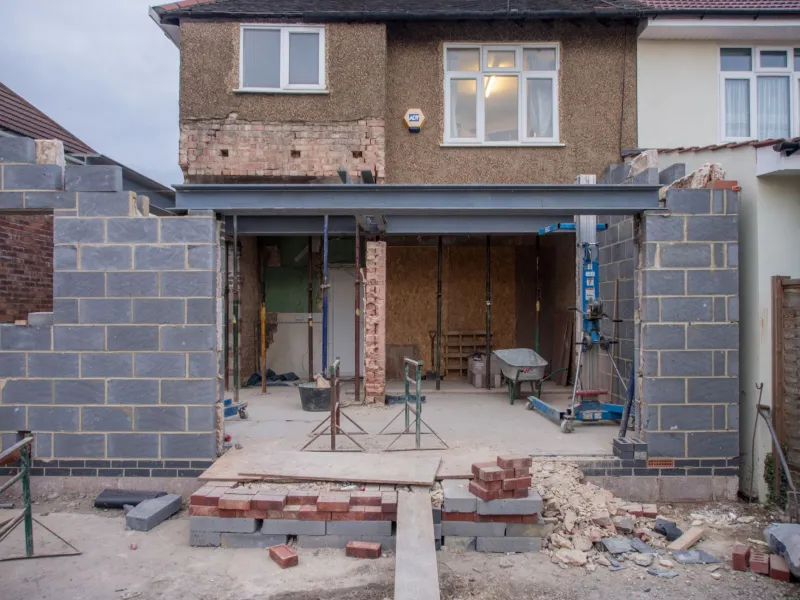
For a renovation project, the value of an extension is usually expressed in additional bedrooms, kitchen-dining space or a better aspect. Less often is it expressed as the area lost to a drainage easement. Yet a three-metre strip running along a side return can make a side-return extension uneconomic. A sewer crossing a rear garden can sterilise the obvious site for a rear addition. A drain beneath a garage can complicate a garage conversion, particularly where the proposed floor slab or foundations would reduce access for maintenance.
The test is not whether the drain can be moved. It is whether the drain can be moved at acceptable cost, in acceptable time, and with the necessary consents. Relocating a public sewer is rarely a simple variation. It may require the water authority’s approval, an assessment of flows, construction within its specification, and a legal agreement. Where the sewer serves neighbouring properties, the consent of others may be needed. A scheme that depends on such a relocation is not necessarily unviable, but it is a conditional scheme, and the price should reflect that condition.
Adoption risk and private infrastructure
Unadopted drainage infrastructure is a particular concern on older estates and on sites with shared private systems. A private pumping station may serve several properties, with maintenance costs apportioned through a management company or estate charge. If adoption has never been completed, the buyer may inherit an obligation to repair and insure assets that serve others. The cost can be irregular and difficult to forecast, and the liability may not be obvious from a routine survey.
Adoption risk also affects timing. A development that relies on a new drainage connection may need a sewer adoption agreement, often known as a Section 104 agreement in England and Wales, together with a bond or surety. Where the infrastructure is not adopted, the responsibility for future maintenance may sit with the owners or a management company. That affects service charges, resale disclosure and lender appetite. A buyer should establish who owns each asset, who maintains it, what charges apply, and whether any adoption or vesting agreement is in place.
What lenders and insurers will notice
Lenders are not typically concerned with the condition of a drain in isolation, but they are concerned with title, access and the marketability of the security. A property whose extension sits over a sewer without a build-over agreement may be difficult to value and difficult to sell. An indemnity policy may address some legal defects, but it does not authorise construction over a protected asset, nor does it satisfy a water authority’s engineering requirements. Building control and warranty providers will also expect the foundation and drainage design to be coherent. These are not matters that can be left to a post-completion certificate.
A pre-exchange checklist
- Obtain the water authority’s sewer map and asset records for the property and immediate surroundings. Compare the route with the proposed extension, garage conversion or basement scheme.
- Commission a CCTV drainage survey that identifies connectivity, condition and the direction of flows. Ask the surveyor to mark the route on a site plan.
- Read the title and legal enquiries for easements, rights of access and maintenance obligations. Confirm whether any easement restricts building within a specified distance of the asset.
- Establish adoption status for every drain and pumping station that serves the property. Identify the responsible party and any adoption agreement.
- If building over or near an asset is proposed, obtain pre-application advice from the water authority and a build-over agreement in principle before exchange. Do not rely on an indemnity policy as a substitute.
- Appoint an engineer to design foundations and drainage around the constraint. Price the design, consents and construction as a single package.
- Check service charges, estate rentcharges or management company accounts for pumping station maintenance and insurance.
- Model the time risk. A drainage consent can sit on the critical path alongside planning and party wall awards.
- Reflect the constraint in the offer. Where an easement sterilises part of the site, value the property on the reduced developable area, not on the area shown on the estate agent’s plan.
- Prepare a resale pack that discloses the drainage regime clearly. Transparency at exit is part of build quality and part of investment discipline.
Drainage is rarely the most glamorous line in a renovation appraisal, but it is one of the most durable. It survives changes of use, changes of ownership and changes of lender. A buyer who maps the pipes, reads the rights and prices the adoption risk before exchange is not being overly cautious. They are protecting the developable area on which the whole return depends. OPPS Developments treats that as a core part of build-quality and investment appraisal, not an afterthought once the scaffolding goes up.