The Heat You Don't Own: Diligence on Communal Energy Centres Before Exchange
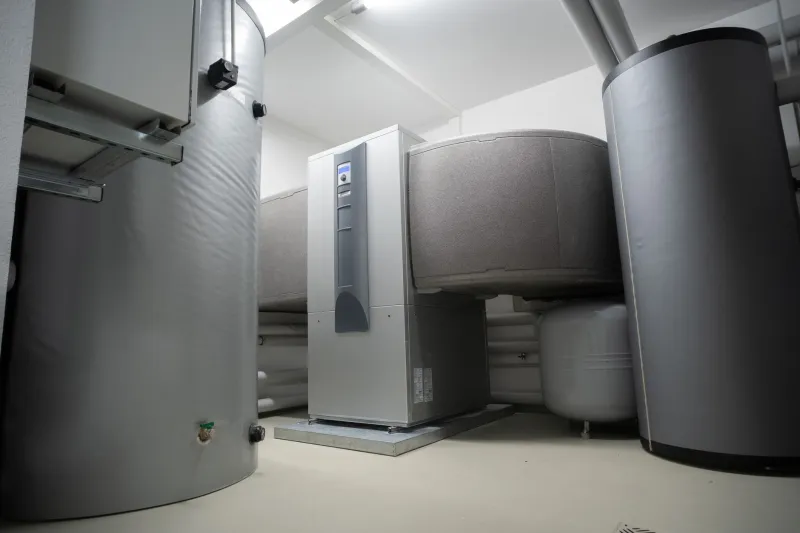
A communal heating system is one of the few features of a building that can look like an asset on the particulars and behave like a liability on the balance sheet. The boiler plant, the heat interface units, the risers and the energy centre itself are ordinarily owned by a third party — sometimes the freeholder, sometimes a special-purpose energy services company, occasionally a distant successor to the original developer. The occupier pays for heat, and the leaseholder pays for the plant through the service charge. Neither controls it. For a buyer underwriting a flat conversion or a block of new-build stock in 2026, that separation of ownership from cost is precisely where the diligence needs to concentrate.
Begin With the Ownership Chain, Not the Boiler
The first question is deceptively simple: who owns the energy centre? In many blocks the plant room sits within the freehold of the building and is demised to an ESCO under a long lease or concession agreement, frequently of twenty-five to forty years. In others it forms part of a wider district network serving several buildings, in which case the relevant title may be entirely unconnected to the property you are buying.
Ask for the head lease, any sub-lease of the plant, the concession or operation-and-maintenance agreement, and the most recent accounts of the entity that operates the network. A special-purpose vehicle with modest capital and no parent guarantee is a materially different counterparty from a utility-backed operator, and the difference should be reflected in the price you are prepared to pay. Where the freeholder is itself a company, check its filed accounts and any charges registered against the energy centre.
Two Contracts, Not One
Purchasers routinely read the lease and skim the heat supply agreement. Both bind. Where no signed agreement exists, occupiers may be on a deemed contract whose terms are set unilaterally by the supplier — a position that offers little protection and should be treated as a red flag rather than an administrative detail.
Read for four things: the supplier's obligation to supply (a covenant of "reasonable endeavours" is weaker than an absolute obligation); the mechanism for varying tariffs; the exit and disconnection provisions, including any charge for leaving the network; and whether the agreement transfers automatically on sale or requires novation. In buildings where the network is the only source of heating and hot water, the practical ability to disconnect is close to nil, and the exit clause has little commercial meaning. That should be priced, not ignored.
Tariffs and the Comparison Trap
Heat network customers cannot switch supplier, so the usual discipline of the retail market does not apply. Two charges matter: the standing charge, which accrues whether or not the property is occupied, and the unit rate per kilowatt hour. The standing charge is the more corrosive of the two in a portfolio context, because it continues through voids, refurbishment periods and any extended marketing campaign.
Benchmark the delivered cost of heat against a realistic counterfactual — a gas boiler with a modern condensing efficiency, or a heat pump where the building has been retrofitted — and apply that comparison across the expected hold period. The Heat Trust publishes cost comparison material for consumers that is a useful sanity check, and its voluntary standards on service and compensation remain a reasonable proxy for good practice even where the network is not a member. Under the Heat Network (Metering and Billing) Regulations 2014, as amended, charges must be reasonable and based on actual consumption where individual metering is feasible; a network billing a flat fixed monthly sum with no metering is a compliance question as well as a valuation one.
Metering, Billing and the Consumer Standards That Are Coming
The Energy Act 2023 established the framework for Ofgem to regulate heat networks, with authorisation, consumer standards and, in England, heat network zoning intended to channel new development towards networked solutions. The direction of travel is towards tighter consumer protection, which is broadly helpful to buyers — but it also means legacy networks with poor metering, opaque billing or thin capitalisation may face remediation costs that ultimately land on the service charge.
Check whether the network has been notified to the Office for Product Safety and Standards as required, whether individual heat meters or heat cost allocators are fitted, and whether bills show consumption in a form an occupier can understand. For older conversions, the absence of metering is common and depresses both lettability and resale liquidity.
Plant Life and the Replacement Question
Boilers in communal plant typically have a design life of fifteen to twenty-five years; combined heat and power units rather less. Heat interface units inside flats are often the first component to fail and are frequently excluded from the operator's maintenance obligation, leaving leaseholders to fund replacements individually.
Request the maintenance records, the last service report, the water treatment and inhibitor regime, and the legionella risk assessment. Then look at the reserve fund. If the sinking fund has not been built to cover plant replacement, the eventual bill will be met through a Section 20 consultation and a substantial demand, and that exposure belongs in your appraisal today. A building with a fully funded reserve and a documented plant replacement programme is a different proposition from one where the boiler is nineteen years old and the fund holds three months of expenditure.
Handover Risk in Newer Blocks
Where the developer retains the energy centre and sells heat at a margin, the network may be thinly capitalised and the tariff set to recover construction cost over time. Ask what happens at handover, whether the ESCO will be novated or sold, whether a parent company guarantee exists, and what remedies occupiers have if the operator fails. A network that cannot demonstrate a viable long-term operating model is a resale problem that will surface at the worst possible moment.
A Practical Diligence Pack
- Head lease, plant lease, concession and operation-and-maintenance agreements
- Heat supply agreement, or confirmation of deemed-contract terms
- Two to three years of heating bills for the unit, split between standing charge and consumption
- Metering and billing compliance evidence, including OPSS notification
- Plant service history, water treatment records and remaining design life
- Reserve fund statement and any plant replacement study
- Confirmation of Heat Trust membership or equivalent standards
- Written confirmation of what transfers on completion and at what cost
Pricing the Tie
Once the facts are in, the arithmetic is straightforward. Capitalise the standing charge across the hold period, add an allowance for plant replacement per unit, and apply a liquidity discount that reflects the narrower pool of buyers willing to accept a network they cannot leave. That discount is not a criticism of communal heating as a technology; it is a recognition that a cost you do not control carries a risk premium. Buyers who quantify it before exchange tend to be the ones who are still comfortable with the building five years later.