The Capitalised Risk: Asbestos Diligence in Pre-2000 UK Renovation Appraisals
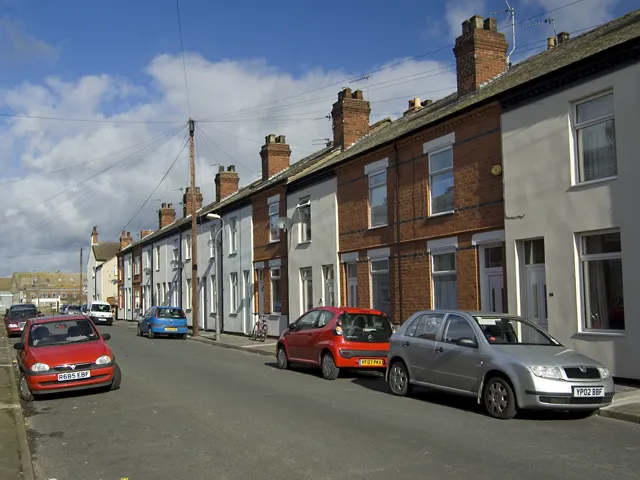
Photo: Paul Harrop, CC BY-SA 2.0, via Wikimedia Commons
Asbestos is frequently discussed as a health-and-safety obligation rather than a valuation input. For UK buyers of pre-2000 renovation stock, that distinction matters. A do-er-upper is priced on the assumption that the building can be opened up, stripped out and rebuilt to programme. If asbestos-containing materials are present and have not been properly assessed, that assumption fails. The cost is not only the removal invoice; it is the standing time, the delayed drawdown, the extended void period and the loss of negotiating position when the discovery arrives mid-build.
The appropriate response is not to avoid pre-2000 stock. Much of the UK’s most viable renovation and retrofit opportunity sits in buildings completed before the turn of the millennium. The response is to capitalise the risk explicitly in the appraisal, before exchange and before the first hammer swing.
Survey First, Valuation Second
A management survey has a role in occupied buildings and routine maintenance, but it is not the document on which a refurbishment appraisal should rest. For a project involving strip-out, alteration or demolition, the relevant instruction is a refurbishment and demolition survey. It should be carried out by a competent surveyor, with UKAS accreditation where the scope requires it, and it should be sufficient to inform the tender and the programme rather than merely to record visible suspect materials.
The appraisal should carry the survey as a line item, not as an afterthought. For a typical UK terraced house or small commercial conversion, the survey fee may be modest relative to the purchase price, but the information it produces can shift the entire risk profile. Buyers should resist the temptation to rely on a vendor’s historical report, a verbal assurance that the building was “done years ago”, or a desktop review. Asbestos registers age, buildings change and previous refurbishments can conceal as much as they remove.
Where access is limited before exchange, the appraisal should include a provisional sum for further investigation and a clear condition precedent. A price that assumes a clean bill of health is not a neutral price; it is a price that transfers an unknown liability to the buyer.
What the Refurbishment Survey Should Price
The survey report should be translated into three cost categories. The first is removal and disposal of confirmed asbestos-containing materials. The second is the cost of access, enclosure, air monitoring and clearance where the works require it. The third is programme impact: the time during which other trades cannot proceed, scaffolding cannot be altered, or a lender’s valuer cannot sign off a stage.
Disposal is not a minor add-on. Asbestos waste must be handled under the correct waste classification, consigned through the appropriate hazardous-waste route and documented with waste transfer notes. Landfill tax and licensed-carrier costs should be reflected in the removal quotations, not absorbed later as an unexplained variation. For notifiable non-licensed work, the notification and record-keeping obligations also carry administrative time that should sit in the programme.
The appraisal should distinguish between licensed and non-licensed work. Licensed removal is required for the higher-risk materials, and the contractor market for that work is narrower than the general refurbishment market. That matters for procurement: a competitive tender among general builders will not produce a compliant price for licensed removal. The cost plan should identify the specialists, the lead-in period and the availability risk.
The Elements That Most Often Carry Asbestos
Pre-2000 stock contains a familiar cast of suspect materials. Sprayed coatings, lagging and insulating board are among the higher-risk items and are likely to require licensed removal. Asbestos cement products, including roof sheets, rainwater goods and some flues, are more common but still require controlled handling. Textured coatings, floor tiles and adhesives, bituminous products, gaskets and rope seals can all appear in residential and mixed-use buildings.
The appraisal should not attempt to diagnose from a photograph or a building age alone. It should, however, use the building’s construction and servicing history to set the survey scope. A 1960s or 1970s building with original heating distribution, ceiling voids and service risers presents a different risk profile from a 1990s shell with limited original fabric. The point is to avoid commissioning a survey so narrow that it misses the areas most likely to be disturbed by the proposed works.
Sequencing to Protect the Programme
Asbestos removal should be sequenced as an enabling work, not as a reactive interruption. The refurbishment survey should be complete before the strip-out tender is finalised. Removal should be completed and cleared before follow-on trades take possession of the affected areas. Where full removal is not practicable, the programme should show how remaining materials will be protected and how future works will avoid disturbance.
The cash-flow consequence is straightforward. If removal is deferred until a builder opens a ceiling and finds lagging, the contractor may suspend work, the site may need to be cleaned and cleared, and the lender’s stage release may slip. The buyer then funds standing time from reserve or from a more expensive facility. A modest survey and removal allowance, priced early, is usually cheaper than a mid-build variation priced under pressure.
How to Reflect the Risk in the Appraisal
The appraisal should carry asbestos costs in three layers: a known cost for confirmed materials, a risk allowance for inaccessible areas, and a contingency for discovery during works. The known cost should be based on contractor quotations or measured rates, not on a percentage of build cost. The risk allowance should reflect the age and complexity of the building. The contingency should be released only against evidence.
The investment case should then be tested against a delayed exit and a higher build cost. If the scheme only works when asbestos is absent, the buyer is not underwriting a renovation; they are underwriting a clean survey. A simple sensitivity test — adding the removal cost, the programme delay and the financing cost of both — will show whether the purchase price still leaves a defensible margin.
Documentation and Exit
Finally, the file should be capable of supporting a future sale, refinance or valuation. That means retaining the survey, the removal quotations, the clearance documentation, the waste consignment records and the contractor’s completion evidence. For lenders and subsequent buyers, a documented asbestos position is more valuable than an undocumented assurance that the issue was “dealt with”.
Pre-2000 stock will remain central to UK renovation and retrofit supply. The buildings are not the problem; unpriced uncertainty is. Buyers who commission the right survey, price removal and disposal properly, sequence the works before other trades arrive and document the outcome will treat asbestos as a capitalised risk rather than a cash-flow trap.