Strata of Risk: Pricing Mining Subsidence and Severed Mineral Rights in 2026
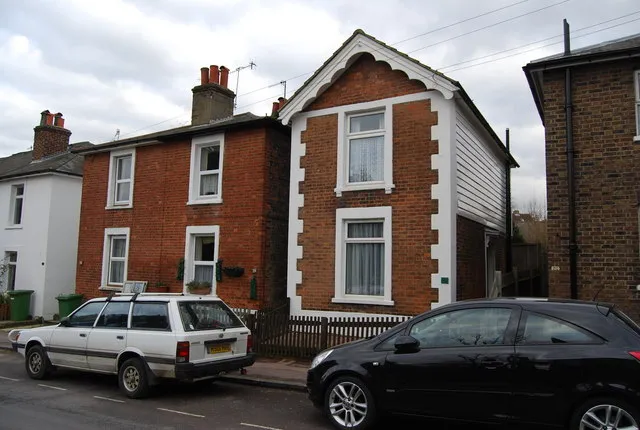
Photo: Nigel Chadwick, CC BY-SA 2.0, via Wikimedia Commons
A standard UK conveyancing pack creates a comfortable illusion of completeness. Local authority search, drainage, environmental screening: the boxes are ticked, the certificate is filed, and the buyer turns to the more visible work of kitchens, roofs and rewires. Yet for a renovation target in a former coalfield, a salt-bearing county or a chalk valley, the risk that should govern the appraisal may never appear in the standard pack at all. It sits beneath the footing, in old workings, dissolution features and titles that stop at the surface.
For OPPS Developments readers, the issue is not geological curiosity. It is underwriting discipline. A property can be structurally sound above ground and still carry a subsidence exposure that changes the lender's appetite, the insurance premium and the exit value. The task in 2026 is to bring that exposure into the appraisal before exchange, not after the first crack appears.
The Search That Is Not Always Standard
The Law Society's CON29M coal mining report is the best-known product in this field, but it is not automatically included in every conveyancing quotation. Buyers should confirm in writing whether the solicitor has ordered it, and whether the report covers past workings, future workings and mine entries. For properties in Cheshire, parts of the south-east chalk belt or areas with historic limestone extraction, a coal-only report may be the wrong instrument. A combined mining and mineral search, or a bespoke geotechnical desk study, may be more appropriate.
The timing matters as much as the content. A mining report ordered after the mortgage valuation has been commissioned can leave the buyer paying twice for professional advice and negotiating from a weaker position. Where a conditional offer or option period is available, the search should be treated as a pre-exchange condition, with the results feeding directly into the price and the lender pack.
Coal: Reading the Record, Not Just the Headline
The Coal Authority holds records of past, present and probable future coal workings. A report that identifies shallow workings, outcrop conditions or a recorded mine entry is not, by itself, a verdict on the property. The relevant questions are geometric: how deep are the workings, how thick is the seam, what is the nature of the overburden, and how close is the nearest mine entry?
A recorded shaft or adit within influencing distance of the proposed extension is a materially different proposition from a deep seam worked long before the terrace was built. The Coal Authority has powers and duties in relation to coal mining subsidence damage, but not every movement will attract compensation, and the existence of a statutory regime is not a substitute for a structural engineer's view. The appraisal should distinguish between a record that requires investigation and a record that requires a remediation scheme.
Salt, Chalk and the Dissolution Question
Coal is the most familiar mining risk, but it is not the only one. In Cheshire, historic salt extraction and brine pumping have produced subsidence and property damage that are well documented in the technical literature. In chalk areas, natural dissolution can create voids and cover-collapse sinkholes without any mining record at all. Limestone and other mineral workings add further variation.
These risks are harder to screen because they do not always sit within a single national dataset. A coal mining report may be silent on salt, and an environmental search may flag a general susceptibility without identifying a specific hazard. The practical response is to ask the solicitor what the search covers, to commission a geotechnical desk study where the geology warrants it, and to treat any recommendation for trial pits or boreholes as a cost to be priced rather than a box to be deferred.
Mineral Rights: What the Freehold Does Not Include
A freehold title to the surface is not the same as ownership of everything below it. Mineral rights can be severed, and in some cases the coal itself is vested in the Coal Authority while other minerals remain in private or Crown ownership. The Land Registry title may contain an exception or reservation, and the title plan will not show the full picture.
Severed mineral ownership is not automatically a defect. In most residential contexts, the practical risk is limited because the mineral owner has no automatic right to access the surface or to work in a way that withdraws support. But the diligence file should still establish what has been severed, who owns it, and whether any historic lease, licence or access right survives. A legal review of the mineral position is cheap relative to the cost of discovering a third-party interest after completion.
Pricing the Ground: Investigation, Remediation and Insurance
Three cost lines belong in every appraisal where a mining or dissolution risk has been identified. The first is investigation: a desk study, a structural engineer's inspection, and any boreholes or trial pits needed to confirm the ground model. The second is remediation: grouting, resin injection, drainage improvements, underpinning or, in the worst cases, a scheme that affects the development layout. The third is the carrying cost of insurance and lender conditions.
Remediation figures should come from a chartered engineer's outline scheme, not from a search flag. A budget allowance without a design is a guess, and guesses tend to be too low. Insurance deserves equal attention. A history of subsidence or a recorded hazard can lead to a higher excess, a restricted policy or a specialist premium. Capitalising that uplift over the intended hold period gives a clearer comparison between two otherwise similar purchases.
Lender resistance is the final filter. A mortgage valuation is not a structural survey, but a valuer who identifies a mining risk may require a structural report, recommend a retention or decline the property altogether. Some lenders will not lend on a recorded mine entry within influencing distance, even where remediation is technically feasible. That is a liquidity risk, not merely a cost risk, and it should be reflected in the exit assumptions.
When the Search Should Stop the Deal
A mining search should become a deal-breaker when the hazard cannot be bounded. That includes an active or recorded mine entry within influencing distance with no credible remediation scheme, unremediated subsidence damage that affects the main structure, a mineral severance that carries surface access rights, or a lender and insurer response that removes the property from the standard mortgage market. In those cases, a price reduction is not a substitute for an unresolved risk; it is simply a transfer of the problem to the next buyer.
Where the risk is bounded and priced, a discount may be rational. The distinction is evidence. A report that says further investigation is required is not evidence of safety, and a seller's assurance is not a substitute for a chartered engineer's opinion.
A Diligence Sequence for 2026
Before exchange, confirm the search instructions in writing, review the title for mineral exceptions, commission a geotechnical desk study where the geology warrants it, obtain a structural engineer's view on any recorded hazard, and ask the lender's valuer what evidence would be required to support the loan. Price investigation, remediation and insurance separately, then test the appraisal against a stressed exit. The ground beneath a renovation target is part of the asset, and in 2026 it deserves the same scrutiny as the roof above it.