The Street-Level Bill: Auditing Scaffold, Permit and Access Costs Before Exchange
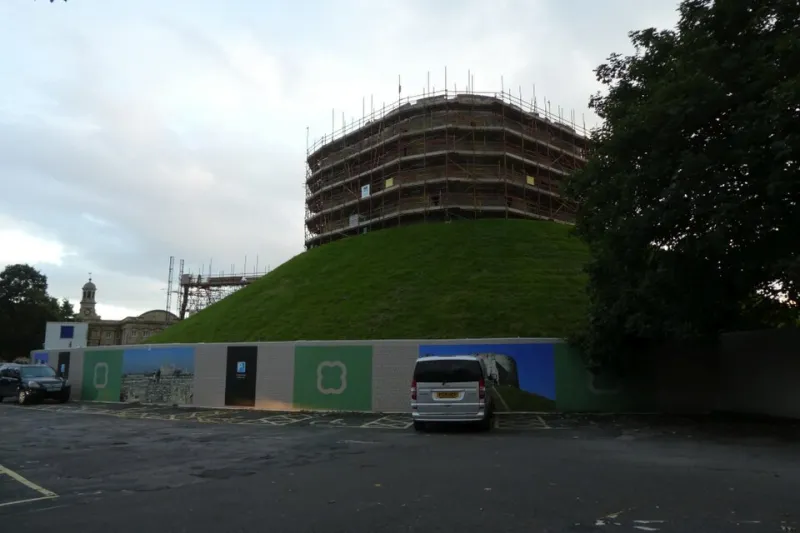
Photo: DS Pugh , CC BY-SA 2.0, via Wikimedia Commons
A UK renovation appraisal usually begins with the building: roof condition, wall tie corrosion, damp, services, structural movement. Those are the visible risks. The less visible risk sits at street level, where scaffolding must stand, where a skip must be placed, and where a pavement licence must be granted. Access costs are not incidental. They are a predictable class of expenditure that can be audited before exchange, provided the buyer is willing to look beyond the front door.
For 2026 acquisitions, the prudent approach is to treat access as a separate appraisal line rather than a contractor's afterthought. The difference between a straightforward refurbishment and a stalled project is often not the build cost itself but the permission timeline that allows the build to begin.
Why access belongs in the appraisal
A contractor's quotation for scaffolding is usually based on an assumed set of permissions and an assumed ability to occupy the highway. If either assumption fails, the quotation is not a fixed price. It becomes a starting position. Pavement licences, parking suspensions and skip permits are issued by local highways authorities under regimes that vary considerably between councils. Some process applications quickly; others require consultation with ward councillors, traffic management assessments or highway inspectors. The cost is rarely limited to the application fee. The real cost is the delay and the additional scaffold hire while permission is pending.
An appraisal that excludes these items is not conservative. It is incomplete. Access costs should be estimated at the same stage as roof coverings and electrical rewires, not discovered when the scaffold erector arrives.
The permissions most buyers overlook
Four permissions recur in urban and suburban renovations. The first is a pavement licence or scaffold licence, allowing the structure to occupy the public highway. The second is a parking suspension, which removes designated bays beneath or beside the scaffold. The third is a skip permit, which is separate from the scaffold licence and often administered by a different department or contractor. The fourth is a hoarding or temporary structure consent where the site boundary is to be extended.
Each carries a fee, a lead time and a set of conditions. Some councils require public liability insurance certificates and traffic management plans. Some refuse suspensions on bus routes or red routes. A buyer who assumes that a standard scaffold can be erected without highway occupation may find that the property requires a more complex, cantilevered design that avoids the pavement entirely. That design is more expensive to erect and more expensive to dismantle.
Reading the street before the surveyor arrives
A useful access audit begins with a walk along the street, not a review of the floor plan. Note the width of the pavement, the presence of street trees with tree preservation orders, the location of lamp columns and signal boxes, and the proximity of bus stops. Check whether the property sits on a red route, a controlled parking zone or a conservation area. Conservation areas may bring additional scrutiny of temporary structures, and listed buildings may require consent for scaffold that attaches to the fabric.
Access is also a neighbour question. Scaffold often needs to stand on adjoining land, even briefly. A right of access may exist in the title, but it may not extend to scaffolding, and it rarely extends to a skip or a materials compound. Early conversations with adjoining owners are not a courtesy; they are a risk-reduction exercise. A neighbour who refuses access can force a more expensive design or a delay that runs into months.
Scaffold design and the cost of obstruction
Scaffold pricing is driven by more than height. The obstruction beneath the scaffold matters. A pavement licence may require a protected walkway, which adds cost. A narrow street may require a loading bay suspension. A property set back from the road may need a crane lift for materials, which brings its own permit and traffic management requirements. Where the scaffold cannot be tied to the building, a different design becomes necessary, and that design may need structural calculations.
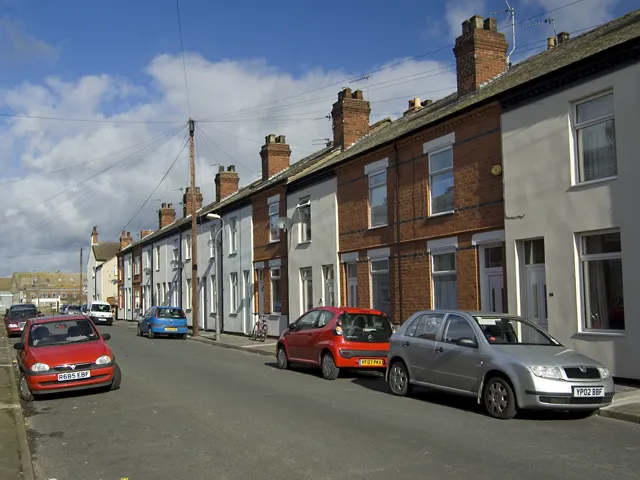
These are not remote possibilities. They are ordinary features of UK terraced streets, high streets and conservation areas. A buyer who has not priced them has not priced the project.
Turning the audit into a negotiation lever
Access findings are most valuable before exchange. A vendor who has owned the property for years may never have considered scaffold permissions. A buyer who presents a written access schedule, with council fee estimates and indicative lead times, is not being obstructive. They are demonstrating that the price must reflect a real cost. In a market where margins are tight, that schedule can justify a reduction or a condition in the contract.
The lever works best when it is specific. 'Scaffolding may be difficult' is not a negotiating position. 'The highway authority requires a pavement licence with a six-week lead time and a parking suspension for four bays, and the adjoining owner has not granted access' is a negotiating position. It translates directly into cost and programme.
A pre-exchange checklist
Before exchange, obtain the council's current pavement licence and skip permit application requirements in writing. Confirm whether the street is on a red route or a bus route. Check the title for access rights and any restrictions on temporary structures. Ask the vendor whether adjoining owners have been approached. Commission a scaffold design quotation based on the actual site constraints, not a generic price per square metre. Add a contingency for delay, and record the assumptions in the appraisal.
The objective is not to eliminate access risk. It is to price it honestly. A renovation that is underwritten with street-level costs included is more likely to finish on programme and less likely to require a mid-build recovery. The scaffolding premium is real, but it is not invisible. It is written on the pavement, in the parking bays and in the permission letters that sit behind the contractor's quotation.